
Life Skills
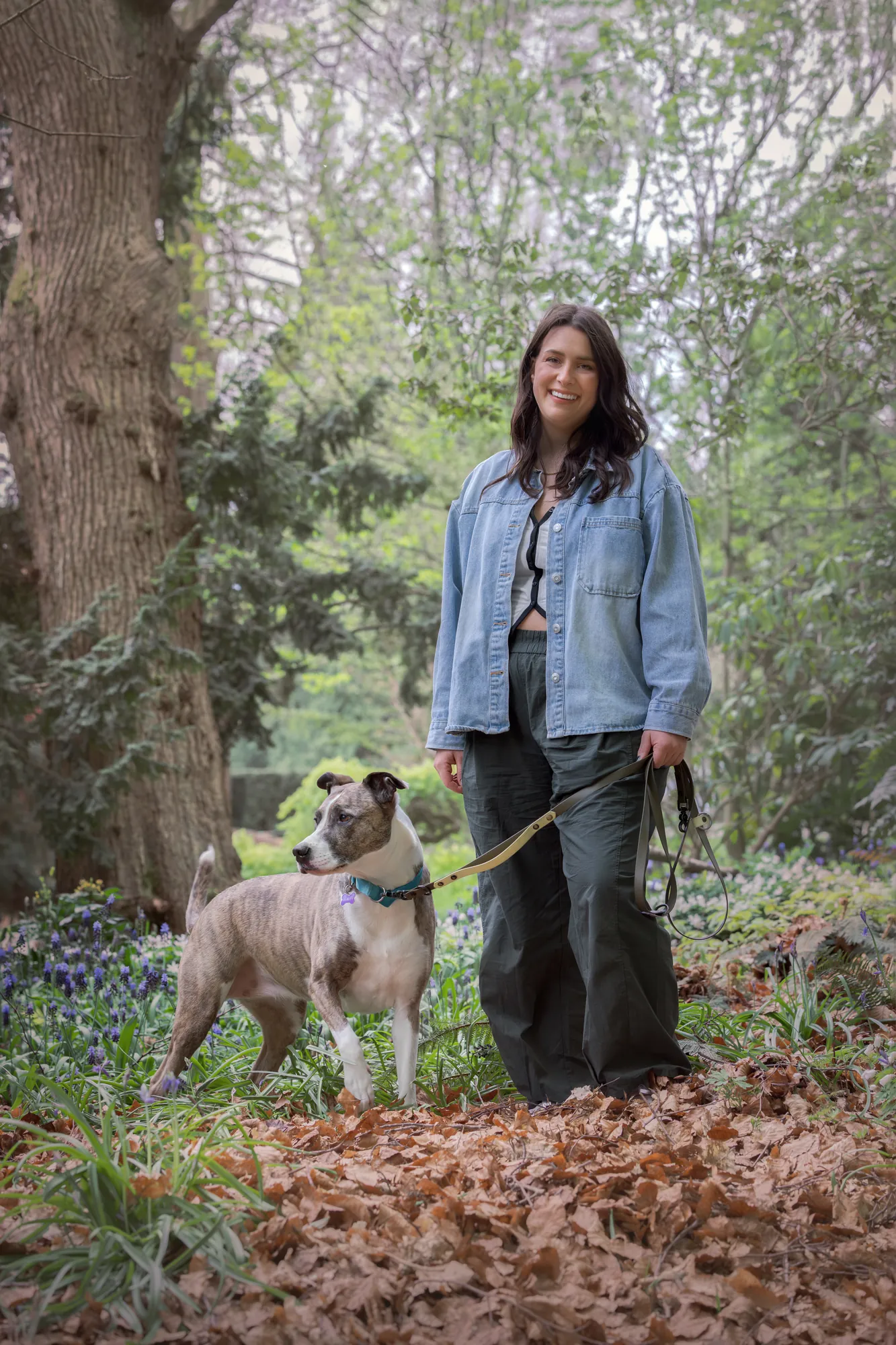
Build the skills to help you and your dog navigate the world confidently and cooperatively. Learn how to enjoy experiences together from off-leash hikes, relaxing leash walks, and visits with family and friends.
Things you can learn to do
Leash Skills
Learn how to have a relaxing walk with your dog.
Off-Leash Skills
Help your dog learn to not just come when called, but to actively check in and stay close when off leash.
Settling Skills
Help your dog feel more relaxed and safe by teaching them to chill out on a mat, bed, at your feet or in a crate while at home, visiting friends or at the vet.
Polite and Patient Skills
Help your dog be relaxed around people and other dogs.
Help your dog learn how to be patient and polite around food, people, other dogs, toys, thresholds and barriers. We'll work together to create a plan which supports your dog's behavioural health. Once we meet our dogs' needs, we set the stage for them to be happier, more fulfilled and responsive companions.
In short
Life skills are the everyday things that decide whether having a dog is relaxing or exhausting. Walking without being towed. Coming back when it counts. Settling in a cafe or at the vet. None of it is obedience for its own sake, and most of it prevents the problems that bring people to a trainer in the first place.
Loose leash walking
Pulling is not defiance. Dogs walk faster than we do, pulling has always worked to get them where they want to go, and a tight lead makes most dogs pull harder rather than less.
The work is teaching your dog that staying near you pays, and that a loose lead is what makes forward progress happen. That means rewarding the position you want rather than correcting the one you do not, and it usually means slowing down before speeding up. Expect the first sessions to cover very little ground.
Equipment matters here. A well-fitted harness gives you control without adding discomfort to every step. We do not use prong collars, choke chains or electronic collars. That follows the American Veterinary Society of Animal Behavior position on humane dog training, which advises against all three and recommends reward-based methods instead.
Off leash and recall
A reliable recall is not a dog who comes when there is nothing better on offer. It is a dog who checks in on their own, keeps track of where you are, and turns back mid-chase.
We build that in stages: first in the house, then the garden, then a quiet trail on a long line, then genuine off-leash environments. The long line is the part people skip, and it is the part that stops a dog learning that ignoring you works. We also teach the check-in itself, so returning to you becomes a habit rather than a command.
On the North Shore this matters more than most places. Trails run alongside off-leash areas, wildlife is genuinely present, and a dog who does not come back is a dog who ends up on lead forever.
Settling
Most dogs are never taught how to be calm. They are asked to be calm, which is not the same thing, and usually only once they are already wound up.
Settling is a trained skill. Your dog learns that a mat, bed, crate or spot at your feet means nothing is going to happen and they can switch off. Built properly it travels, so the same behaviour works in a friend's kitchen, at the vet, on a patio, or when the doorbell goes.
The skill that prevents the most problems. A dog who can settle is easier to live with, easier to take places, and far less likely to develop the arousal-driven behaviours that turn into reactivity or separation problems later.
Polite and patient
Waiting at thresholds. Not mugging visitors. Leaving food alone. Sharing space with other dogs without needing to greet every one of them.
These look like manners and are really impulse control, and impulse control is a skill dogs can be taught rather than a trait they are born with. Practise it around food, toys, people, doorways and other dogs, and the underlying ability transfers to situations you have not specifically trained for.
Why this prevents later problems
A large share of the reactivity and anxiety work we do traces back to skills that were never built. A dog who cannot settle is a dog who is permanently a bit switched on. A dog who has rehearsed pulling for two years finds the outside world overwhelming rather than ordinary.
Once a dog's needs are met, they are happier, more fulfilled and more responsive. Life skills are the least dramatic training there is and the most useful, and they are considerably cheaper to build than to repair.
Where we work
Life skills training goes where the skill is needed. Settling starts at home. Leash and recall work move to real streets and real trails as your dog is ready. Training covers North Vancouver, West Vancouver, Vancouver, Burnaby, Coquitlam and New Westminster, with online sessions available across Canada.
Common Questions
Where are the sessions held?
Wherever you and your dog feel the most comfortable! We normally recommend starting in a home environment (if possible) so your dog is relaxed and can work on the training with no outside distractions.
How long should I wait between bookings?
We normally recommend leaving about two weeks between bookings so you have enough time to put in place the training routines we'll be working on. However, if you'd prefer to wait longer between training sessions, that's totally fine too!
How long are the training sessions?
Each session lasts about one hour.
Related reading

How smart is your dog?
Each breed and each individual has their own strengths and weaknesses when it comes to solving problems.
Read article →
Puppy Training
Learn the skills to help your puppy grow up to be the companion you've been looking for!
View details →
Aggression/Reactivity
We'll work together to find the root cause of your dog's reactions.
View details →